Worldbuilding
Worldbuild while you write your comic
Mention a character, a place or an event once. The dossier, the reference count, the timeline and the web of who-knows-who all build themselves out of that one mention.
Mention it once. It files itself.
Type @ and a name in your script, the way you would write it anyway. From then on that name is a real thing your project knows about: every place it appears is counted, and the scene it appeared in is recorded, so "which chapter did she first say that?" is a click rather than an afternoon.
Nothing is filed by hand and nothing is filed up front. The dossier exists because you wrote the name, not because you remembered to make one.
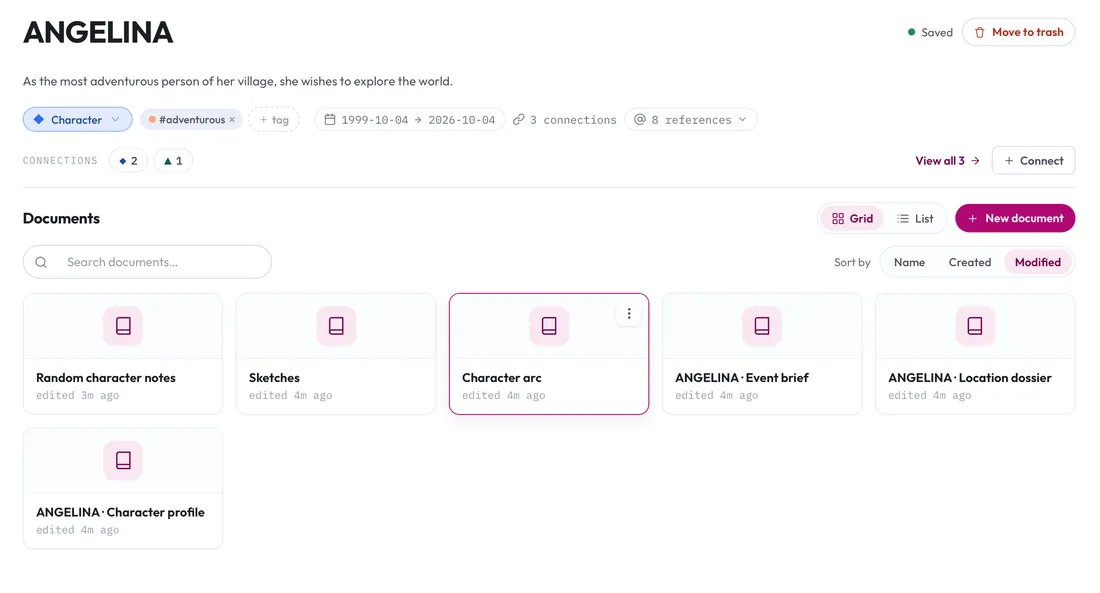
Characters, places, events, and whatever else your story runs on
Three kinds are there when you start. They are not a fixed list: name your own, give it a shape and a colour, and that shape carries through everywhere the thing appears.
- Kinds are yours to invent. Factions, artefacts, ships, spells, unresolved arguments. If your story keeps track of it, your project can too.
- Tags cut across them. A kind is what a thing is. A tag is anything else you want to find it by later, and one thing can carry as many as you like.
- The colour is the shorthand. Pick it once and the orb in the graph, the chip in the list and the bar on the timeline all agree, so you read the shape before the label.
See the whole web at once
Connections are typed, directional and worth a note: mentor, owes a debt to, does not know yet. Zoom out for the constellation, zoom in and each orb opens into the thing itself. It is how you remember that the sister of the uncle running the secret organization is your protagonist's long-lost cousin.
- Zeref dislikes Dona
- Angelina is from the Village
- Angelina respects Dona
- Dona defeats Javlo
- Dona visits the Bar
- Javlo visits the Bar
- Zeref is the leader of The Band
- Javlo is a member of The Band
- Dona defeats Random Guy 01
- Dona defeats Random Guy 02
- Dona defeats Random Guy 03
- Angelina was kidnapped by Random Guy 03
- Angelina fought Random Guy 02
- Random Guy 01 is a friend of Random Guy 02 and Random Guy 03
Put the events in order, on a calendar you invented
Date a beat and it lands on a shared timeline you can drag to reschedule. Trace one character and watch their thread cross everyone else's. And if your world does not run on Gregorian months, build the calendar it does run on and the timeline uses that instead.
As deep as the comic needs, and no deeper
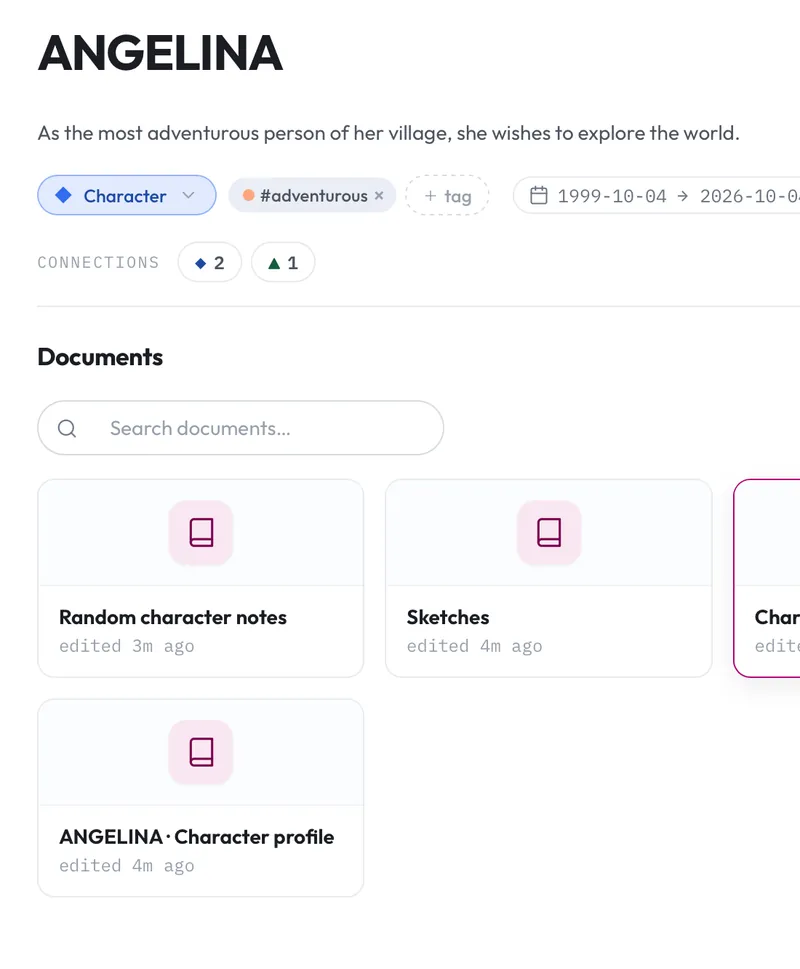
A three-line note and a twelve-page dossier are the same kind of thing here, so you are never choosing a format before you know how much you have to say. Every character, place or event can own as many documents as it needs, with references and sketches sitting in them.
They open in the editor you already write your script in, because they are the same kind of document. Nothing new to learn, and nothing to rewrite to bring your existing notes across.
This is one half of the loop. See how a page gets made, read who builds this, or check what each plan includes.